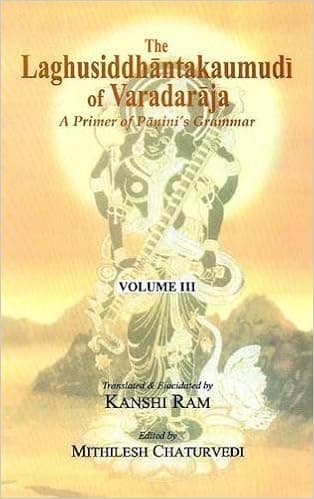
The Laghusiddhantakaumudi of Varadaraja (Vol. 3) A Primer of Panini's Grammar
The present volume, which is the third and final of the three-volume-series, consists of five chapters containing the elucidated translation of 508 sutras and 69 varttikas which lay down the meaning conditions for the use of case-endings and explain the derivational process of primary (krdanta) and secondary (taddhitanta) derivates, compounds (samasa) and feminine forms. The scheme and method of exposition adopted in the preceding two volumes have been followed here also. In the first chapter, the krt-affixes are expounded. The affixes, which are prescribed after verbal roots in the governing domain of dhatoh (763) and are other than tin-affixes, are designated as krt in accordance with the aphorism krdatin (301). These primary affixes are employed to form nominal bases like karta, pacaka, etc. and other primary derivatives such as pitva, gacchan, etc. These affixes have been treated under four heads in the Laghu: (1) krtya affixes, (2) purvakrdanta, (3) unadisutras and (4) uttarakrdanta. The second chapter entitled vibhaktyartha-prakarana discusses the karaka and upapada case-endings very briefly. The third chapter is devoted to compounds (samasa). The words for the sake of brevity. The purpose of the grammatical function of compounding words is to bring about a unique single word which is to have one main accent (aikapadyam aikasvaryan ca samasatvad bhavati, Kasika on Pa 2.1.27). To explain, the syntactically and semantically connected words rajnah and purusah occurring in the string rajnah purusah, are combined into a single compound word rajapurusah by sasthi (927). Since it is treated as a single word, it has one main accent, that is, the last vowel a, following the cerebral sibilant s, is marked with the udatta accent by samasasya Pa. 6.1.223. The fourth chapter explains the derivational process after the introduction of taddhita affixes which are introduced after a finished word ending in a sup-affix which is deleted as the derivatives formed with these affixes are assigned the pratipadika designation by krttaddhitasamasasca (116). The last chapter contains the elucidation of the sutras which prescribe feminine affixes to form feminine derivates.
- ASIN
- 8120836162
- Embedding
- CLIP ViT-L/14 · 768d
- Distance metric
- cosine
- Doc fetch
- 2mscache hitGET /v2/namespaces/amazon-products/documents/8120836162
- Similar query
- 22msnearest_to_id → /query
Doc fetch goes through Layer's Aerospike pull-through cache; cache hit served the row without touching turbopuffer. The similar query asks Layer for nearest neighbors of the stored product vector — queries don't go through the doc cache, so no cache header is set.
You might also like