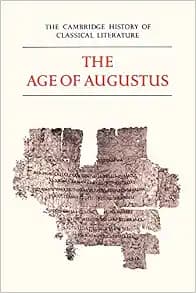
The Cambridge History of Classical Literature: Volume 2, Latin Literature, Part 3, The Age of Augustus
The sixty years between 43 BC, when Cicero was assassinated, and AD 17, when Ovid died in exile and disgrace, saw an unexampled explosion of literary creativity in Rome. Fresh ground was broken in almost every existing genre, and a new kind of specifically Roman poetry, the personal love-elegy, was born, flourished, and succumbed to its own success. Latin literature now became, in the familiar modern sense of the word, classical: a balanced fusion of what was best and most stimulating in earlier Greek and Roman writing, charged with new and original life by the individual genius of, most particularly, Virgil, Horace and Ovid. Augustan literature, conventionally viewed as the expression in writing of the age itself - political and social stability reflected in artistic equilibrium - turns out on a close and critical reading to have been subject to the same stresses and strains as the society in and for which it was produced. In appraising the monumental literary achievements of the age the underlying tensions and contradictions are not ignored. The critical discussions in this volume do full justice to the complexity and subtlety of the literature itself.
- ASIN
- 0521273730
- Embedding
- CLIP ViT-L/14 · 768d
- Distance metric
- cosine
- Doc fetch
- 1mscache hitGET /v2/namespaces/amazon-products/documents/0521273730
- Similar query
- 32msnearest_to_id → /query
Doc fetch goes through Layer's Aerospike pull-through cache; cache hit served the row without touching turbopuffer. The similar query asks Layer for nearest neighbors of the stored product vector — queries don't go through the doc cache, so no cache header is set.
You might also like